Monday, January 26, 2009

God's Short List


I volunteered the other day to read some theology and blog about it in connection with a project Tripp Fuller is doing over at Homebrewed Christianity. He got so many applicants he's having to sort us out with some questions on a registration form, including this one:
What is the most interesting God question in your mind today?
So, with a little box to fill in, here's what I discovered I had to say about that:
I'm interested in minimalist Christianity from a practical standpoint, because the smaller something is, the faster it can be copied and spread. I blogged about this under the heading "Viral Christianity" here: This drives my interest in Simple Church, House Church, Organic Church, Todd Hunter's "Three is Enough" groups and so on. It also is part of an ongoing exploration into my own theological heritage (Lutheranism) which, while it can be as baroque as the next guy's, has certain features lurking at it's core that I think make it ripe for radical self-pruning.

That's what I think about anyway. To re-frame it as an answer to your question, maybe I'd put it this way; "What's on God's short list of the things that really, really mater for the Church?"
Nothing like a good question to get things moving.


So, what do you think is on God's short list?

And what would your life, and your church look like if you used the same list?

Saturday, January 24, 2009

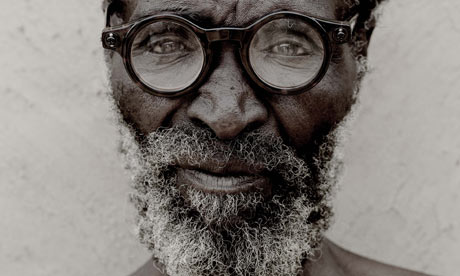
Eyeglasses for the Poor

I like to take note of encouraging signs that the poor of the world might actually have their lives improved. That's part of what I recognize as answers to the prayer; "Thy Kingdom Come!" So I think I'll start passing these on under the heading "Blessings to the Poor."

For starters, here's a link to an article about a British Physicist, Josh Silver, who has invented eyeglasses for the poor that the wearer can adjust to their own "prescription" without the need for an optometrist. He estimates they can be produced for $1 per pair and his goal is to have one billion pairs delivered by the year 2020. (20-20... get it? Cute!)

Here's a quote from the article about how much this could mean to people:
The implications of bringing glasses within the reach of poor communities are enormous, says the scientist. Literacy rates improve hugely, fishermen are able to mend their nets, women to weave clothing. During an early field trial, funded by the British government, in Ghana, Silver met a man called Henry Adjei-Mensah, whose sight had deteriorated with age, as all human sight does, and who had been forced to retire as a tailor because he could no longer see to thread the needle of his sewing machine. "So he retires. He was about 35. He could have worked for at least another 20 years. We put these specs on him, and he smiled, and threaded his needle, and sped up with this sewing machine. He can work now. He can see."
You can also hear a 3 minute segment from National Public Radio interviewing Josh here. It says that the U.S. Military has already purchased 20,000 pairs to give away.

How cool is that?!

Here's the Wiki page on him, a link to the Adaptive Eyecare project, and a YouTube video of him demonstrating how they work.

Of course, what he really needs is a "Donate Now" button! That's something I'd like to see.

Thursday, January 1, 2009

Outcome-Biased Christianity?

Phyllis Tickle had an interesting post at the Emergent Village site that led me to write a comment I wanted to share here as well. She was writing about how people are rethinking the very definition of church and Church (which often ends up significantly shaping how people actually live as C/church.) She offered this expression:
...as of right now, I believe both church and Church are “a body of people delighting in God, the Father, God, the Son, and God, the Holy Spirit.”
Here's what that triggered in me:
I like the feel of C/church as a “body of people delighting…” because it moves away from trying to define C/church on the basis of it’s attributes, and instead looks at how one might recognize C/church through it’s actions and attitudes. (I think that’s what you mean when you say it has “predication.”)

In my own thinking, I’ve begun to look for C/church as the body that, because of its delight in its relationship with the God revealed in Jesus, lives into three outcomes:

  • Growth of individuals into Christlikeness,

  • Growth of the C/church body itself (deeper in relationship among members, wider in drawing more into the body), and

  • Growth of the Kingdom beyond the C/church (as seen in justice, mercy, kindness, abundance etc. for all.)

To me, that expression provides the necessary specificity by linking C/church directly to Jesus, while also allowing for enormous diversity of belief and practice around him as the center.

I thought about referring to this as "Outcome-based Christianity" but that's not quite right... The basis isn't in the outcomes, so much as the relationship which impels us to pursue them. But I am drawn to the idea of being "outcome-biased." For one thing, I think it steers us away from investing too much into theologizing on the front end about what the C/church is or isn't. And for another, it pushes us past simply focusing on what the C/church does (e.g. we do "word and sacrament" or we do "worship, fellowship, discipleship, ministry and evangelism") without at least checking to see if all our activity is resulting in anything or not.

I think I'll continue to muse on that, and I'd appreciate some feedback, particularly about how this might help shape the life of the C/church in practical ways.

Saturday, November 29, 2008

Viral Christianity


What would it take for the church to go viral?

That's on my mind pretty persistently these days. All the more so as I'm reading Frank Viola and networking with people pursuing "simple church" and "organic church" expressions. So I guess it's no surprise that even a political editorial can get me started down that track again. For example, here's what I read this morning in an article by Danielle Allen about Obama's use of the internet:

Over the last two years, the Obama campaign... used its website to disseminate tools for grass-roots organizing and made its campaign infrastructure infinitely expandable as groups replicated over and over, learning from and copying one another. The campaign infrastructure became, to a significant degree, self-organizing. This explains its remarkable people power.

Among the people I know in conventional church settings, self-organizing groups that learn from and copy each other as they replicate just because someone gave them the tools... well, it's pretty hard to envision. But among the simple/organic/house church people I encounter, that's not just what they envision, it's what they do.

Personally, I get an extra kick out of this because terms like "self-organizing" and "replicate" take me back to my days in grad school doing Molecular Biology research with an RNA virus. (Here's a little shout-out to all those Fan lab alumnae!) So when I muse about "viral Christianity" I don't just think about the internet and social networking. Visions of particles and genomes dance in my head as well.

So let me just try and wander my way into one point today. When you're a virus, "keep it simple" is an extremely powerful strategy. The smaller and simpler you are, the easier it is to make more of you. The smaller your genome is (the number of genes that make up your DNA or RNA), the less time and energy it takes to replicate it. The virus we worked with in my lab actually had only three genes. Three! Yet with just that it was able to infect a cell, instruct it to create a vast pool of virus components, assemble the parts and bud off mature virus particles capable of starting the next cycle.

"Viral Christianity," if it's to spread effectively will want to be as small, as simple as possible. Including blueprints for buildings, reproducing twenty-page constitutions, and requiring four years of grad school to train a leader before you can start is not simple, and simply ineffective. I am not saying those things are inherently bad. I am saying that if you require them or rely on them, you'll never go viral.

So. What is the smallest number of "genes" required for the church to be the church and to replicate, and what are those genes? That's what I think about.

I wonder if we can get it down to three?

Sunday, October 19, 2008

Emerging Parents and "Church"

A fellow blogger over at Emerging Parents posted a question about how people are parenting their children in the changing church landscape:
What is your family currently doing as far as growing your children spiritually? Do you attend church, do church in a home or an alternative and how did you come to this decision?
Here's what I wrote - a little window into life in our home:

My wife and I are both pastors, currently serving as interim pastors in two different congregations, and we have two girls ages 12 and 7.

As others have said, we are trying to teach our children to be church 24/7 along with us as we try to do that ourselves! But as far as Sunday worship services are concerned we are frankly making it up week by week.

Sometimes they are with me, sometimes with mom, sometimes with extended family at a third congregation which is near our home and has their school friends attending. Other times we have a family worship time at home on Sunday.

A while back, I specifically wrestled with how I felt about the girls not having "a church home" since they were so itinerant as a result of our employment. I ended up ambivalent. I see a loss to them from not having one particular community to identify with and the consistency of relationships there. But I see a greater gain to them of having a clear sense of belonging to something much larger than a congregation.

Given the growing uncertainty I have about the future of conventional congregations, that broad experience may end up being more valuable to them that I can imagine!

Monday, September 29, 2008

Money Talk Church

I think about house churches a lot, talk about them frequently, and write about them occasionally. Yet for all of that I've never really been a part of one much less led or planted one, though I have visited a few. It's frustrating and not just a little embarrassing. And it leaves me with persistent, nagging doubts about just how realistic all this thinking is. So naturally I'm thrilled whenever I meet someone who is in a house church. That's always a great encouragement. But I read something in the paper on Monday that really convinced me that this can work. It was an article about the Smart Cookies - a group of women who banded together to help each other get out of debt. Here are some excerpts from the article:

In 2006, these five young professionals living in Vancouver, B.C., formed a "money club," a sort of financial-health support group. After two years, they reduced their collective debt from $55,000 to $10,000. All either own their own homes or are on the way there, and are regularly making deposits in IRAs and savings accounts.

They accomplished this impressive feat by setting individual spending limits at weekly meetings, then holding the overspenders accountable -- over a bottle of wine -- at the next meeting. They shared clothes, low-cost recipes, advice and encouragement. Each week, one member researched a topic to share with the group, such as how to calculate credit-card interest.

"The first meeting was really scary, laying out all our checking and Visa statements for everyone to see. A bottle of wine was definitely involved, which we recommend."

"We'd all tried on our own, read all these financial books, but it had no effect on our lifestyle. Knowing you have to share your saving and spending record for the week helps you resist temptation."

That's not a house church, but it absolutely could be.

Just look at the themes that are in play:
  • Small group
  • Frequent, regular gatherings
  • Self-organizing
  • Openness based on trust rooted in mutual acceptance
  • Real-life relevance and goal-focused
  • Accountability (sought, not imposed)
  • Joy and celebration
What really amazes me is that the very topic we struggle to get people to engage seriously in church - namely money - is the topic they are most eager to focus on!

These days when people are so anxious about money as they watch Congress try to respond to the hosing/credit/banking crisis and the market teeters it really makes you wonder... couldn't we start churches with a mission to help people put their financial houses in order like these women did?

Of course, there would be suspicion. We're talking about money of course. People would wonder if this is just a front to get them to contribute to some denomination or pay the salary of the "evangelist." They'll be watching for the catch and wanting to read the fine print.

But what if the church planter/evangelist took no salary? What if he or she had independent support from other churches that wanted to bless the new congregations, or maybe worked a regular job as well on the side... like making tents or something?

Nah. It'd never work.

Too bad though. I'd love to give it a try.

Monday, September 22, 2008

Twin Cities House Churches

For the last two years I've been looking to see how God might use me to support the house church movement. Along the way, I've encountered quite a few people here in the Twin Cities who are involved in house churches but I haven't seen much in place to help them link up or even just have conversation to share stories, learnings and encouragement.

When Jon Dale set up the Simple Church network it seemed like a good opportunity for me to create a common space within it for people in my area. So I set up a group called "Twin Cities, MN" within the SC network. I don't have a specific agenda or a vision for this online group, but I do hope it makes it easier for people to connect in person. It's great we have access to so many social networks now and it's a gift that they let us connect across the miles and the seas. But I do believe we need people locally as well that we can meet and work with in person.

If you are interested in simple/house/organic church expressions I encourage you to check out this network. It's only been up for a couple of weeks but already has over 600 members and quite a few of them are outside the US. And if you are in the Minneapolis/Saint Paul area, I'd really love to have you join the group I set up there. Maybe we can work towards having a public site for the area like the excellent one put up by Colorado House Churches.

Friday, September 5, 2008

Easum, Emergent and more conversations about Truth


There's a valuable conversation taking place just now between Bill Easum and Emergent-minded folks that I've been adding my voice to just a bit. In fact, Bill is stimulating several conversation on his blog where he's described...
"...a growing conversation is taking place that no Christian leader can afford to ignore. The players in this conversation are multiplying like rabbits. As we will see in a moment, much of the future of Western Christianity lies at the heart of this conversation. So we had better pay attention.

Here’s a list of the primary players as of now

The Emergent Folks
The Incarnational Folks
The Organic Folks
The Attractional Folks
The Reproductive Folks"

He's taking each of those players in turn to offer his insights and advance the discussion. I highly recommend it. (Bill has been a formative influence in missionalizing my faith for a decade or so.)

Part of his conversation with emergents is playing out in parallel on the Emergent Village blog, which is where I've done most of my posting. I expect this to be especially valuable because Bill and Tony Jones will be alternating posts once a week in a month long "blogologue."

My own interest really spikes when this conversation turns to discussion truth and knowing which is a giant piece of the conflict between Modern and Postmodern thinking that so often is playing out between Evangelicals and Emergents these days. I confess, I like that stuff in part becasue it's brain candy for me. But I'm also very excited becasue I see it having massive practical implications for daily Christian life and evangelical mission.

If you want to follow the discussion and see my writings so far, you can find that at the EV blog I mentioned above. But I'll also be posting a synopsis here soon as well.

Tuesday, July 15, 2008

House and Mega Church in Conversation

Back in May I mentioned in a post that my friends at House2House were getting some inquiries and support from some folks among the megachurches. I asked them if there was more that they could say about that and Felicity Dale was kind enough to share the following, along with permission to post it here.


"Thank you for your comments on the Simplychurch.com blog. Yes, we are aware of the Willow Creek situation and like you, are blessed by their honesty.


We find ourselves increasingly excited about the potential of working with some of the megachurches (and the regular sized community churches for that matter too). Just in the last few weeks we have had contact with three megachurches, all of whom are interested in working with us in some way. One is asking us how they can bless the simple church movement. They did the same a couple of years ago, and made their video department available to us and produced the video component of the Getting Started course. A second here in Austin is asking us how we can help them to run true house churches as part of their outreach. And then a third leader from a megachurch asked to meet with us to find out more about what is happening within the organic church world. We had a brief time with him a week or so ago and now are in ongoing contact. We know that others are getting the same kind of opportunities too.


It is not just the megachurches, but denominations and mission groups are also showing interest. For example, just a few weeks ago we were asked to speak to the Texas rural regional co-ordinators (or some such title) of a major denomination to share what is going on.


Who knows where God is taking all of this. The potential is incredible. It is a huge privilege to be a tiny part of what is going on. Pray that we hear Him in it all and don't mess it up!"


That's certainly encouraging. If others know of partnerships between house churches and other, larger forms of church I'd love to hear about it here.


Tim

Sunday, June 22, 2008

Missional SynchroBlog

Rick Meigs over at Blind Beggar recently voiced his "continuing concern that the term missional has become over used and wrongly used." So to foster some discussion about what we all mean by "missional" he put out a call for a SynchroBlog on the topic for today. I'm pleased to be one of 50 bloggers taking a crack at it, and savoring the irony of 50 bloggers writing about a term we're concerned is being over used. But that's just me. ;)

For a change of prose, I'm going to let my Inner Modern sit this one out, along with some of my better judgement perhaps, and just start out with this:

Missional is like pornography. It's hard to define but you know it when you see it.

Here's what I've been seeing lately.

I heard one person trying to explain house church to another, saying it was not just another worship option, like going from traditional to contemporary to house church worship. "It's not an alternative worship service - it's an alternative lifestyle." That's missional.

I was thinking about the Lord's Prayer. The petition "Hallowed be thy name" always feels like it's still awaiting translation into English. I think it wants to be something like "I want you to be famous everywhere!" followed by "And I want everything to be just the way you want it!" Or maybe even this: "My Father - large and in charge, oh yeah!!" Either way, it strikes me - what does a life look like when those two things are at the very top of your prayer list? Missional.

Recently I gave myself the challenge of telling the Old Testament story in three minutes or less and produced this narrated slideshow. In it, I set the stage for Abraham by saying that at first everything was good, but then something went wrong and it all came apart. Then I summarized God's response to the crisis with these words; "I am going to fix this, no matter how long it takes, no matter how much it costs me." Now that's missional!

I've been helping the congregation I serve re-think "membership" along the following lines. Church membership is not like health club membership where you pay for privileges. Rather, it's like public radio where the programming is free but people join anyway because they believe in the mission and want to help keep it free for other people too. But better still, Church membership is like yet another organization people join voluntarily because they believe in the mission: the Army. Public radio listeners are still mostly passive receivers, but in the Army you are the one who does the work. That's why they send you right off to basic training - a great model for new church members, eh? That's missional.

So... string all that together and it comes out something like this: An alternative lifestyle where your top priorities are all about signing on to God's project to repair the World because you want to do that work. That's missional.

I hope there's something helpful to you there - that always feels like my little part of the mission. And I invite you to check out what the others have to say as well. The blogroll is included below.

Blessings!

Tim


Missional SynchroBlog Blogger List
Alan Hirsch
Alan Knox
Andrew Jones
Barb Peters
Bill Kinnon
Brad Brisco
Brad Grinnen
Brad Sargent
Brother Maynard
Bryan Riley
Chad Brooks
Chris Wignall
Cobus Van Wyngaard
Dave DeVries
David Best
David Fitch
David Wierzbicki
DoSi
Doug Jones
Duncan McFadzean
Erika Haub
Grace
Jamie Arpin-Ricci
Jeff McQuilkin
John Smulo
Jonathan Brink
JR Rozko
Kathy Escobar
Len Hjalmarson
Makeesha Fisher
Malcolm Lanham
Mark Berry
Mark Petersen
Mark Priddy
Michael Crane
Michael Stewart
Nick Loyd
Patrick Oden
Peggy Brown
Phil Wyman
Richard Pool
Rick Meigs
Rob Robinson
Ron Cole
Scott Marshall
Sonja Andrews
Stephen Shields
Steve Hayes
Tim Thompson
Thom Turner

Saturday, June 14, 2008

The Three Minute Old Testament

Here's something I'd like to share. I created this short telling of the Old Testament narrative to support a sermon series we're doing at my church for he summer. It has what I think is the bare minimum of details for the story to hold together. As with any telling, it's an interpretation. I've presented the "plot" of the story as God's plan to use Israel as a showpiece and a meeting place to introduce himself to the rest of the world, with the whole people serving as a "priestly kingdom." (Exodus 19:6) I love how consistent God is in this fundamental outward focus for his chosen partner/servants. We see it applied to the Church in 1 Peter 2:9 where we we called a "royal priesthood." It beautifully invites the question: "If we are all priests, then who is the congregation?" All the rest of the world of course, the ones we are called to serve.

So - here is the video. I hope you enjoy it and find it helpful. (The resolution isn't very good so you may want to view a slightly larger version here.) I also want to say thanks to Harry Wendt of Crossways International for the use of his graphic icon for God, his prophet sketch, and general inspiration for this video. I encourage you to check out his excellent Bible-teaching materials!


Thursday, June 5, 2008

Myth of the Balanced Life

Tom Bandy is a church consultant I have high regard for. Here's a sample of his thought from an excellent (and cheap!) online coaching forum he leads with Bill Easum:

"Modern church people (especially boomers) yearn for spiritual habits, but desperately fear accountability. So they have a real approach-avoidance attitude.

I think this is rooted in their desire to live a "balanced life". The myth of the "balanced life" is one of the great illusive quests. Church people often equate the "balanced life" with the "spiritual life" ... when in fact the spiritual life is a very "unbalanced life" ... unbalanced because of their thirst for God is greater than their desire for stability.

In my book Coaching Change, I offer a checklist of mentoring to help "unbalance" Christian leaders:

Crossing the Boundary to Post-Modern Faith

Christendom-----------------------------------Millennium

Systematic Theology--------------------------Pragmatic Christology
Propositional Thinking-----------------------Metaphorical Imagining
Judicious Evaluation--------------------------Experiential Witness
Denominational Heritage--------------------Congregational Identity
Standardized Liturgical Religion-----------Contextual Spiritual Expression
Professionally Interpreted Scripture-------Amateurly Interpreted Scripture
Leadership by Office and Competency-----Leadership by Credibility and Vision

Monday, June 2, 2008

Breaking a 17-Century Habit

I've been writing a little lately over at the Emerging Leaders Network, a Ning-based social network about 130 strong, populated predominantly by Lutherans interested in the Emergent conversation. One thread there led me to write the following about a shift taking place in our culture that undoes something fundamental which has been in place for 1700 years.

"One other thing I wanted to pick up on: you wrote about how "...many Gen X/Y people, especially, haven’t even had enough church contact to be alienated—the church is simply not on their radar." I think that's critically important for us to wake up to. People often talk about the importance of the change in worldview from Modern to Postmodern... shifting something fundamental that has been in place for some hundreds of years. But I believe there is - at the same time - another shift now in process that undoes an assumption that has been in place for 17 centuries: the relationship between Church and civil culture.

"Before Constantine, the Church was viewed as an enemy. Afterwards, the Church was viewed as a partner. (The Reformation - as significant as it was - did not depart from this. It simply led to multiple choices for which Church each State wanted to partner with.) But now, as your observation reveals, this way of relating for the past 17 centuries is changing. The civil culture is now looking at the Church as irrelevant.
"It's this kind of massive context-shifting that I believe really urges us to first, go back to the kernel of Christian faith, and second, experiment wildly with various ways to re-enflesh Christian life and community."

Saturday, May 24, 2008

Media Scan - Recent Articles of Note

Local/Cell-Church: The Minneapolis Star Tribune has an article on Julie Jacobs and her cell church network, Frontier Fellowship. Julie was the first person I profiled for this blog in my 100 Cups of Coffee thread. The article gives a nice introduction to her work and her cell-church approach, and it's good to see the point in print that it's not intended as a rejection of larger/conventional congregations or as a competition for members. My only quibble is where Julie says that "Home churches are trying to grow big enough that they can get a building" in contrast to cell churches that aspire to grow in order to multiply into more cells. (Frankly, I'm skeptical that Julie would make that kind of sweeping generalization.) Obviously, some HCs do aspire to get back in the building, while others intend to grow by multiplication instead. Most of the people I'm in contact with who are active or interested in house church forms are interested in growth by multiplication and are pretty passionate about steering clear of buildings.

National/House Church: My Google Alert service constantly scans the web & blogosphere for me in search of key words and phrases and sent me a surprising notice yesterday. Someone over on the Huffington Post was talking about house churches! This I had to see. Turns out it came up in the post Small Is the New Big in Progressive Politics by Rob McKay. The article is about political organizing strategy and "whether the Democratic Party is about short-term voter excitement or permanent citizen engagement." In that context, he makes these observations:

This new group of efforts focuses on local leadership, small circles, and cultural organizing. They are taking their strategies from the anti-slavery movement, groups like craigslist, and most surprisingly, a new Christian movement. "We keep saying that the evangelical churches gave Bush the White House," Erin Potts, a leader in strategic thinking for groups as diverse as foundations and big rock bands, said. "If we want to know, we have to study it and see what works. And what works, is culture and small groups. The emerging house church movement has a very dynamic and interesting strategy."

Potts and other organizers note that while overall church attendance has steadily declined since the 1990s, a new form of church has taken off--the house church. Unlike traditional churches, the house church movement doesn't meet in a specific house of worship, but instead, as the name suggests, in people's homes. While traditional churches have hierarchical leadership, the house church meets as a circle of peers, and while churches try to grow the membership of a congregation, house churches purposely splinter into smaller groups as soon as a circle gains more than a handful of members.

The success of the house church movement is staggering. Membership is well into the millions. One study suggests that 70 million Americans regularly attend or have experimented with a house church.

I think it wold be pretty ironic if political groups took more and better notice of the HC movement than Christian denominations and congregations. Ironic, but in a way not surprising. Like people in the business world, politicos are driven by a powerful zeal to get an outcome; elections won and policies enacted for one, profit and market share for the other. This drive can lead to experimentation, risk, innovation etc. and it's commonplace to see churches learning from the business world - although typically after quite a lag. But sometimes it seems that urgency, drive and passion are more prevalent in politics and business than in the Church. Profit and power more motivating than sharing the gospel? "Irony" isn't enough to cover that; it's just plain sad.

Moving right along, and to something more encouraging, here's my third newscatch.

Denominational/Emergent: My denominational magazine, The Lutheran devotes its cover article for June to Emergent/emerging ministries with profiles of three examples within the ELCA and a study guide. I haven't read it yet so I can't comment on the content But I will say that my little heart went pitter-pat when I read this among the study guide questions:

If you had a school, home or prison where people proclaimed the gospel and
celebrated the sacraments, would that be the church? Why or why not?
If you're familiar with my blog, you'll know I believe that is a question for which we have an answer - and a very, very Lutheran one at that.


Monday, May 19, 2008

Luther on House Churches

Most of the people I talk with about house churches are Lutherans. One of my favorite things to do is to find out whether they know that Luther himself proposed house churches as the natural, even preferred context for people who were serious about following Jesus. (He calls these people the ones who are "desirous of being Christians in earnest and are ready to profess the Gospel with hand and mouth.") It's great fun to see the look of surprise on their faces - especially the ones who went to seminary and, amazingly, somehow never encountered this fact!

I've got the relevant section from Luther's writings uploaded in my "document vault" but I've neglected to post it here so now's the time to fix that. Here is the key excerpt, with citations at the end. Friends, and Lutherans especially, you'll want to take note of the following:


  • Self-organized

  • Home-based

  • Lay led

  • Full sacramental life

  • Stewardship and social ministry

  • Simple catechetical instruction

  • Ideal context for loving accountability after Matthew 18

  • "Form and Order" are not imported but emerge spontaneously from community life.


I also enjoy pointing out that Luther gave two reasons for why he did not implement this: 1) he lacked the "requisite persons" (leaders, presumably), and 2) no one wanted to do it. So he decided to wait "until those Christians who are most thoroughly in earnest shall discover each other and cleave together." Well, we've got lots of people capable of leading this now, and lots of people who want it, and I can tell you, there are a whole lot of people discovering each other and cleaving together.


Anyway, enough from me. Here's the Old Man himself:


But the third sort [of Divine Service], which the true type of Evangelical Order should embrace, must not be celebrated so publicly in the square amongst all and sundry. Those, however, who are desirous of being Christians in earnest, and are ready to profess the Gospel with hand and mouth, should register their names and assemble by themselves in some house to pray, to read, to baptize and to receive the sacrament and practise other Christian works. In this Order, those whose conduct was not such as befits Christians could be recognized, reproved, reformed, rejected, or excommunicated, according to the rule of Christ in Matt. xviii. Here, too, a general giving of alms could be imposed on Christians, to be willingly given and divided among the poor, after the example of St. Paul in 2 Cor. ix. Here there would not be need of much fine singing. Here we could have baptism and the sacrament in short and simple fashion: and direct everything towards the Word and prayer and love. Here we should have a good short Catechism about the Creed, the Ten Commandments, and the Lord's Prayer. In one word, if we only had people who longed to be Christians in earnest, Form and Order would soon shape itself. But I cannot and would not order or arrange such a community or congregation at present. I have not the requisite persons for it, nor do I see many who are urgent for it. But should it come to pass that I must do it, and that such pressure is put upon me as that I find myself unable with a good conscience to leave it undone, then I will gladly do my part to secure it, and will help it on as best I can. In the meantime, I would abide by the two Orders aforesaid; and publicly among the people aid in the promotion of such Divine Service, besides preaching, as shall exercise the youth and call and incite others to faith, until those Christians who are most thoroughly in earnest shall discover each other and cleave together; to the end that there be no faction-forming, such as might ensue if I were to settle everything out of my own head.

This material can be found online at the Hanover Historical Texts Project, and in Volume 53, pp. 63-64 of Luther’s Works, American Edition.

Thursday, May 15, 2008

Evangelical Venture Capital in Scotland

The Church of Scotland is investing in entrepreneurs, it seems to me.

A news brief I found reports that this Presbyterian denomination is planning to invest about $3 million in "emerging ministries" over five years. Some grants could be as large as $60,000 per year for three years.

But more than the dollars, here's what really caught my eye (emphasis added):


The Emerging Ministries Fund will be supporting projects that engage with people outside inherited formal structures and at grassroots. In many cases this may mean less of a dependence on buildings and getting people to 'come to church' and a greater emphasis on taking church to the people.

The Assembly will hear that the Emerging Ministries Fund intends to support work in three areas: the promotion of new church growth alongside or beyond the existing congregation; establishing church from the ground up and exploring what that means for the given demographic and cultural context; and experimenting with new approaches to ministry.


Can you say "House Church?" Perhaps using - oh, let's call them "Home Front Missionaries" who could plant micro-churches alongside and in companionship with existing congregations?

But enough of that... let's get back to the dollars! My own tribe is about 7 times as large as the Church of Scotland, so if we invested proportionately that would put about $20 some million dollars on the table. That's some dough. If something like that is coming down the pike I'd sure love to hear about it!

Lately the term "seedcasting" has been lingering in my thoughts. Like when the sower sows liberally, though only a few really produce, yet the harvest is still abundant. Seems like a good strategy. Seems like the Scots are gearing up to sow, God bless 'em!

Wednesday, May 7, 2008

Mega Church, Micro Church, and ELCA Pastors in Ecclesiastical Limbo

One of the groups I've encountered that is working on House Church/Simple Church multiplication in the US is House2House. I recently noticed this comment on their blog and it caught my attention:


There have been several instances of mega-churches being in contact with the simple church movement with an amazing openness to what we are doing. One is asking how they can bless us, another how they can get involved in starting organic churches and others wanting to learn more. What would happen if the mega and micro learned to co-operate?


It made me think about Willow Creek's Reveal study and their conclusion that they need to help people become "self-feeders" because merely participating in church programs was leaving people spiritually stalled. (And this at a church with really well developed programs, I'm sure!)

It also made me think about the possibilities for experimental/missional co-operation that might emerge within my own Lutheran tribe. I'm in conversation with some folks denominationally now on that very topic so we'll see where it goes. I believe large and small expressions of the Church are meant to be partners and have unique gifts to share that come with their size. I'd like to be a part of making that happen.

So far however, what I'm seeing in my tribe is more sobering than encouraging. The other day I looked through the list of contacts I've accumulated of people in my denomination who are trying to explore the house/simple church expression as a way to grow the kingdom. Most of them are "on leave from call" which is a kind of ecclesiastical limbo for a pastor in the ELCA. (I'd be there myself if I hadn't happened upon an Interim Associate Pastor position, and I expect to be right back in "on leave" when that job wraps up.) So what I see is that there isn't a ready way for these folks to pursue this work while maintain their standing in the denomination. They end up hanging by a thread, and the clock is ticking, becasue after three years "on leave" you come off of the clergy roster.

I wonder... will my denomination will find a way to hang on to these comitted, risk-taking evangelical entrepeneurs? I sure hope so!

The clock is ticking.