Friday, June 12, 2009

Evangelism as Fundraising: Let's Not


I belong to the Emerging Leaders' Network (how's that for self-aggrandizing!) and a friend there started a discussion about the risk of doing outreach & evangelism as a fund raising strategy when the church is having a hard time making budget. I just had to offer my two bits on that and thought I'd share it here as well:

Here's a small step we're tying to make where I serve.

In our little brochure about membership and in conversation as it comes up, I always present membership this way: Everything of value that this Congregation has to offer, it provides free of charge to anyone who wants it: Baptism, Communion, Sunday School, Bible Studies, worship services, pastoral care and so on. So "membership" provides no additional benefit. Rather, becoming a member is what you do when you want to get on the "supply" side of the equation and join us in keeping all this stuff available to others for free, just like it was for you when you arrived. The only thing you "get" with membership is extra responsibility.

I compare it to enlisting in the Army or Peace Corp: a voluntary choice to join an organization that serves others, because you believe in its mission and want to take part in achieving it.

That also sets up a great point I love to share with prospective new members. When you "enlist" in an organization like that, then they have a responsibility to equip you for the work you will be doing - basic training, as it were. So we as a congregation have begun to provide "Equipping Workshops" for new members (open to everyone, of course) to fulfill our responsibility to them when they join.

On a completely different track, though, and with apologies if I'm being a gadfly, I can't read your post without thinking that there would be a lot less temptation to link evangelism and finance if we could break our dependence on buildings, programs and professional clergy (like me), as if that were the only or even a relatively effective way to be Church. I spend a lot of time thinking about the house church model, which you can easily imagine, would have a very different outlook on both evangelism and stewardship.

Tim

Friday, May 1, 2009

More on Relationships - Movement towards Depth?

Brian made a comment recently voicing concern over the apparent lack of depth often seen in Christian relationships. Here's a sample:
I'm not so sure many people inside church buildings or w/n the crumbling Corpus Christianum know much about relationship as commitment or that relationship entails an ethos of sacrifice. It seems that many Christians opt toward relationship as mere convenience rather than as an expression of faith; buying into the cheapened notion that love is merely a feeling & not much else beyond that. Many Christians have not yet learned to love into relationships when it is inconvenient to them.
I have to say I share that concern, especially because the struggle for substantive relationships seems so deeply rooted in the hyper-individualism that is so characteristic of our age and culture.

With that in mind, you can see why this quote from Phyllis Tickle caught my attention in an e-mail this morning:
"I don't think anybody knows exactly where the Great Emergence is going, much less where the Christianity, emerging/emergent, coming out of it is going to go exactly, but there are some contours that are clearly visible right now and can be described. ... It is definitely communal, even to point that about a quarter of it is probably engaged in a form of monasticism."
I certainly don't see monasticism emerging as the dominant form of Christian life. But I'm sure that the impulse that's driving that expression to grow these days - a hunger for and willingness to pursue substantive relationships - is being felt by many more than just the ones acting on it in that way. So that's encouraging. And there are people at work to nurture that impulse and help others act on it. Karen Sloan is one example. You can watch a video of her discussing it here on TheOozeTV.

What are others seeing in terms of greater dissatisfaction in the Church with "thin" relationships and a willingness to explore ways to find depth again?

Thursday, April 30, 2009

Event Alert: Twin Cities House/Organic Chruch Conference


We interrupt our current series of posts for this important announcement: a really good conference is being organized for June in the Twin Cities for people interested in the missional movement showing up in simple-, house- and organic-church expressions.

The official site for the conference will be Matthew Berry's Raw Religion, but at the moment I've found the most information here on Katie Driver's Backseat Driver blog.

Among those who will be taking part are:
These are all folks I've heard before and highly recommend.

Spread the word, and if you'll be going let me know. I'd love to meet up there.

Friday, April 24, 2009

What the Bishop Said, Part 2: Relationships over Programs and Structures

As I mentioned in the first post of this series, I'm exploring four "core values" offered by my Bishop Peter Rogness, to lift up the ways I see them align with a house church expression. Peter's first value is this:

Relationships are more life-giving than programs or structures.

It's tempting just to write QED and move on to the next post, but I'll expound a bit anyway.

He's absolutely right of course. Relationships must have primacy over programs and structures, and the latter should be evaluated on the basis of how they contribute to the former. Sort of a "Sabbath was made for humans, not humans for the sabbath" kind of thing (Mark 2:27). I'm convinced we desperately need to make the changes that would reflect having relationships as a real priority.

So, how do we act on this value?

In conventional congregations, it's going to be tough sledding. Most of our resources there are invested in large group activities that are inherently less able to nurture relationships, Sunday morning worship being the most prominent example. (I've written more about this fundamental mis-alignment here.) Programs and structures are already in place - dare I say entrenched - and institutional inertia is a hard force to overcome. Not to mention the chronic challenge of funding even when we're not in a historic recession. But this re-prioritization is important work and it needs to be done. At a minimum, there needs to be an emphasis on nurturing small groups or perhaps "counting conversations" as Reggie McNeal has suggested. Kudos to Peter for putting relationships at the top of his list.

But there is another option: start fresh. Start new communities that are centered on the primacy of relationships from the outset and let them generate the programs and structures they need to support that kind of life. New communities, where the small group is the primary expression rather than a programmatic add-on. In a word, house churches.

It's not an either/or situation. I do not believe we should abandon conventional churches rather than take on the hard work of re-aligning their priorities. But I do believe we should add another strategy, and invest at least some of our time, energy and funding in an approach that's naturally aligned with the primacy and priority of relationships.

If we want to take Peter seriously, and I believe we should, I think that's what we'll need to do.

Friday, April 17, 2009

What the Bishop Said: Four Values that Point towards Lutheran House Churches

Recently I heard my Bishop speak, and just about everything he said made me think about house churches.

Peter Rogness is my Bishop and a very fine Bishop he is, IMHO. He was speaking to a gathering of local ELCA clergy and shared with us the four core values that he envisions guiding the shared work of our congregations. It's good stuff! Here they are:
  • Relationships are more life-giving than programs or structures;
  • Outreach is fundamental;
  • We are “repairers of the breach;”
  • Being Lutheran is an asset.
As he was introducing each of these to the group, I was doodling/taking notes on a plate. Each time he introduced a value I found myself thinking; "Well, that fits with house churches." (It's sort of a mental reflex for me now. No matter what anyone says about anything, I'm likely to be thinking about how it relates to house churches.)

So for the next few posts I'm going to take each of those values in turn and talk about how I see it pointing us towards an emphasis on a house church expression. Stay tuned!

Friday, March 27, 2009

A Simple Resource for a Simple Church

Brian over at Faith Practice & Simple Church Movements has posted a wonderful little brochure (still a draft) that offers a description of simple churches. It includes a set of three norms for this kind of church life that are oriented towards practice rather than doctrine.
  • A Rhythm of Presence speaks to the relational foundation, being present to God and each other in ways that are significant and active.

  • A Movement of Renewal speaks to the outward focus of working to bring peace and justice - God's shalom - more fully into the world.

  • A Culture of Blessing speaks to enacting grace in love and gentleness no matter what you do (or is done to you.)
Beyond being explicitly centered on Jesus it is presented without any doctrinal core or theological boundaries. Some may find that to be a weakness, but for the purpose helping to nucleate a broad spectrum of faith communities instead of cloning the one you have I find it to be an attractive strength. I think this comes through most clearly in this one comment in a section of final thoughts; "Communion & baptisms should become a consistent expression of your simple church."

I invite you to take a look at his work and give him some feedback as he continues to develop it. Below are the first couple of introductory paragraphs.

Tim

This simple church brochure is designed for Jesus-centered & Spirit-led communities that revolve around three essential norms of expression: rhythm of presence, movement of renewal, and culture of blessing.

Simple churches share life together through prayer & deep conversation, over meals, in play & recreation, & through adventure in serving those in need. Simple churches actively seek the care of the last, the lost , and the least in our world – always with a gracious invitation to
join us if you’d like & yet whatever your decision we will still treat you with dignity & respect . . . we will treat you as Jesus himself.

And while this brochure does not place an emphasis on restricted religiosity as typified by many fundamentalist expressions of religion it does have a central focus on following and imitating the practices & teachings of Jesus & the rhythms of the Holy Spirit - envisioning the renewed reality of a people unleashed to collectively utilize their gifts & talents not toward service of money, consumerism, & self but in service of the Kingdom of God that Jesus spoke of constantly. (Read more...)


Monday, March 23, 2009

Renew Community, Lansdale PA - Worth A Look

My daily Google search on the term "House Church" led me to Renew, a network of house churches in Lansdale PA. Judging by their website, these are people I'd like to know better.

A couple of things caught my eye:

A post on the rhythm of their house church life described gathering 2x a month for "Exploring" together, once a month for service, and once more for some form of celebration, which is not a fancy term for a large group Sunday-style worship gathering. Rather, it's as they say; "While followers of Jesus are seldom accused of throwing great parties or being known for being celebratory people, we should have a reputation for this!" Amen to that!!

In previous posts I've talked some (I think) about theological minimalism. So I was pleased to see that the only thing they list under "What We Believe" is the Nicene Creed. That's refreshing.

Apparently they don't - yet - have a public or large group gathering up and running. When they do I'll be interested to see if they feel compelled to offer it weekly or not.

Anyway, if you're interested in "who's out there" or looking for signs of hope on your journey to a different way of being Church together you might like to check them out. And if you live near them in Lansdale... lucky you!

Saturday, March 14, 2009

Twin Peaks: Resource Allocation and Effectiveness in Promoting Spiritual Growth in Conventional Congregations

Dontcha just love that title? It's just like the stuff I used to write back when I was a molecular biologist.

I have an observation.

In conventional congregations, the larger a gathering is, the more resources are invested in it. For example, the typical Sunday morning worship service consumes the vast amount of the resources available. This is true I believe in terms of staff time, funds and physical space. (It's probably true of member time investment as well, to the extent that they invest their time in their spiritual life.)

Here's how that looks:


(You'll notice that I drew that on a napkin to underscore the sophistication of this analysis.)

Thus far, I've restated the obvious.

I also have a hypothesis: The smaller a group is, the more effective it is in promoting spiritual growth (to the extent that the group focuses on spiritual life).

So on one extreme you have spiritual friendships, marriages, mentoring relationships and "two or three are gathered" accountability groups. Next up come the familiar "small groups" and Bible studies. At the other extreme is, well, Sunday morning worship.

Here's how that looks:


The obvious question here is; "What's wrong with this picture?" To which I would respond; "Well, it looks to me as if resource investment in conventional congregations is 180 degrees out of alignment with the strategies that are most effective in promoting spiritual growth."

But here's a more interesting question: "What would congregational life look like if we realigned our resource investment to reflect this?"

Thoughts?

Friday, March 13, 2009

The Magic Purse

So, shameless sell-promotion is okay when you're not selling anything, right? I mean, what's a blog for?

I wrote a short story a while back called The Magic Purse. It's a little fable about scarcity and abundance. Over the years a number of people have downloaded it from a collection of stewardship resources hosted by Luther Seminary and told me that it was helpful to them in their congregations. Cool!

For the last couple of weeks I've been having some more fun with it at my current church. I've used it as the basis for a contest for kids, inviting them to write alternate endings and to create illustrations. It's been fun to see their work! I've created a little website in support of that where you can read the story and the alternate endings and see the illustrations. So if that's intriguing to you, or you're looking for a stewardship resource to use in a creative way, check it out. I think you'll like it.

Thursday, February 26, 2009

Merging Faith, Work and Traffic

Guess it's time for my "monthly" post. Harrumpf.

One of the most fascinating blogs I've encountered is Experimental Theology put out by Richard Beck. He's a gentle writer and brilliant thinker who blogs on faith and science, psychology, philosophy, fuzzy logic, game theory... you get the picture. Oh, and he's done an extended series on Calvin and Hobbes. If you read his blog, be prepared to look up Malthusian on a regular basis.

In his most recent post he shared a chart showing how Americans spend their time:


He brought it up in the context of a discussion about the impact of the rise of the bourgeoisie on the life of Christians and the Church. Some of the comments continued to explore that, but a couple of folks, myself included shared some less philosophical reflections. I wanted to share what I wrote with you here:

I also am interested in how the life of faith is integrated and expressed in each slice of the pie. (Harry Wendt of Crossways.org talks directly about that, even using a pie-chart motif as well.)

For example - as I drive and have to deal with people trying to merge into my lane on the freeway, I've started to hear an echo of John 14:2b "...I go to prepare a place for you." Clearly not what Jesus had in mind, and yet it has made driving in traffic a place where my spiritual life manifests in my own experience and (usually) in my outward behavior as well.

If I was a truck driver, that could open up the bulk of my work life to concrete spiritual expression. Alas, I'm merely a pastor!

But it makes me wonder, how else can we merge work life and faith life in whatever we do, for our own sake and the sake of others?
Concrete spiritual expression for a truck driver - say, that's a good one! Amazing the stuff that pops out when I try and write with my "erudite" voice. ;)

Monday, January 26, 2009

God's Short List


I volunteered the other day to read some theology and blog about it in connection with a project Tripp Fuller is doing over at Homebrewed Christianity. He got so many applicants he's having to sort us out with some questions on a registration form, including this one:
What is the most interesting God question in your mind today?
So, with a little box to fill in, here's what I discovered I had to say about that:
I'm interested in minimalist Christianity from a practical standpoint, because the smaller something is, the faster it can be copied and spread. I blogged about this under the heading "Viral Christianity" here: This drives my interest in Simple Church, House Church, Organic Church, Todd Hunter's "Three is Enough" groups and so on. It also is part of an ongoing exploration into my own theological heritage (Lutheranism) which, while it can be as baroque as the next guy's, has certain features lurking at it's core that I think make it ripe for radical self-pruning.

That's what I think about anyway. To re-frame it as an answer to your question, maybe I'd put it this way; "What's on God's short list of the things that really, really mater for the Church?"
Nothing like a good question to get things moving.


So, what do you think is on God's short list?

And what would your life, and your church look like if you used the same list?

Saturday, January 24, 2009

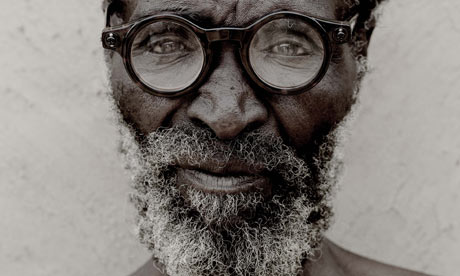
Eyeglasses for the Poor

I like to take note of encouraging signs that the poor of the world might actually have their lives improved. That's part of what I recognize as answers to the prayer; "Thy Kingdom Come!" So I think I'll start passing these on under the heading "Blessings to the Poor."

For starters, here's a link to an article about a British Physicist, Josh Silver, who has invented eyeglasses for the poor that the wearer can adjust to their own "prescription" without the need for an optometrist. He estimates they can be produced for $1 per pair and his goal is to have one billion pairs delivered by the year 2020. (20-20... get it? Cute!)

Here's a quote from the article about how much this could mean to people:
The implications of bringing glasses within the reach of poor communities are enormous, says the scientist. Literacy rates improve hugely, fishermen are able to mend their nets, women to weave clothing. During an early field trial, funded by the British government, in Ghana, Silver met a man called Henry Adjei-Mensah, whose sight had deteriorated with age, as all human sight does, and who had been forced to retire as a tailor because he could no longer see to thread the needle of his sewing machine. "So he retires. He was about 35. He could have worked for at least another 20 years. We put these specs on him, and he smiled, and threaded his needle, and sped up with this sewing machine. He can work now. He can see."
You can also hear a 3 minute segment from National Public Radio interviewing Josh here. It says that the U.S. Military has already purchased 20,000 pairs to give away.

How cool is that?!

Here's the Wiki page on him, a link to the Adaptive Eyecare project, and a YouTube video of him demonstrating how they work.

Of course, what he really needs is a "Donate Now" button! That's something I'd like to see.

Thursday, January 1, 2009

Outcome-Biased Christianity?

Phyllis Tickle had an interesting post at the Emergent Village site that led me to write a comment I wanted to share here as well. She was writing about how people are rethinking the very definition of church and Church (which often ends up significantly shaping how people actually live as C/church.) She offered this expression:
...as of right now, I believe both church and Church are “a body of people delighting in God, the Father, God, the Son, and God, the Holy Spirit.”
Here's what that triggered in me:
I like the feel of C/church as a “body of people delighting…” because it moves away from trying to define C/church on the basis of it’s attributes, and instead looks at how one might recognize C/church through it’s actions and attitudes. (I think that’s what you mean when you say it has “predication.”)

In my own thinking, I’ve begun to look for C/church as the body that, because of its delight in its relationship with the God revealed in Jesus, lives into three outcomes:

  • Growth of individuals into Christlikeness,

  • Growth of the C/church body itself (deeper in relationship among members, wider in drawing more into the body), and

  • Growth of the Kingdom beyond the C/church (as seen in justice, mercy, kindness, abundance etc. for all.)

To me, that expression provides the necessary specificity by linking C/church directly to Jesus, while also allowing for enormous diversity of belief and practice around him as the center.

I thought about referring to this as "Outcome-based Christianity" but that's not quite right... The basis isn't in the outcomes, so much as the relationship which impels us to pursue them. But I am drawn to the idea of being "outcome-biased." For one thing, I think it steers us away from investing too much into theologizing on the front end about what the C/church is or isn't. And for another, it pushes us past simply focusing on what the C/church does (e.g. we do "word and sacrament" or we do "worship, fellowship, discipleship, ministry and evangelism") without at least checking to see if all our activity is resulting in anything or not.

I think I'll continue to muse on that, and I'd appreciate some feedback, particularly about how this might help shape the life of the C/church in practical ways.

Saturday, November 29, 2008

Viral Christianity


What would it take for the church to go viral?

That's on my mind pretty persistently these days. All the more so as I'm reading Frank Viola and networking with people pursuing "simple church" and "organic church" expressions. So I guess it's no surprise that even a political editorial can get me started down that track again. For example, here's what I read this morning in an article by Danielle Allen about Obama's use of the internet:

Over the last two years, the Obama campaign... used its website to disseminate tools for grass-roots organizing and made its campaign infrastructure infinitely expandable as groups replicated over and over, learning from and copying one another. The campaign infrastructure became, to a significant degree, self-organizing. This explains its remarkable people power.

Among the people I know in conventional church settings, self-organizing groups that learn from and copy each other as they replicate just because someone gave them the tools... well, it's pretty hard to envision. But among the simple/organic/house church people I encounter, that's not just what they envision, it's what they do.

Personally, I get an extra kick out of this because terms like "self-organizing" and "replicate" take me back to my days in grad school doing Molecular Biology research with an RNA virus. (Here's a little shout-out to all those Fan lab alumnae!) So when I muse about "viral Christianity" I don't just think about the internet and social networking. Visions of particles and genomes dance in my head as well.

So let me just try and wander my way into one point today. When you're a virus, "keep it simple" is an extremely powerful strategy. The smaller and simpler you are, the easier it is to make more of you. The smaller your genome is (the number of genes that make up your DNA or RNA), the less time and energy it takes to replicate it. The virus we worked with in my lab actually had only three genes. Three! Yet with just that it was able to infect a cell, instruct it to create a vast pool of virus components, assemble the parts and bud off mature virus particles capable of starting the next cycle.

"Viral Christianity," if it's to spread effectively will want to be as small, as simple as possible. Including blueprints for buildings, reproducing twenty-page constitutions, and requiring four years of grad school to train a leader before you can start is not simple, and simply ineffective. I am not saying those things are inherently bad. I am saying that if you require them or rely on them, you'll never go viral.

So. What is the smallest number of "genes" required for the church to be the church and to replicate, and what are those genes? That's what I think about.

I wonder if we can get it down to three?

Sunday, October 19, 2008

Emerging Parents and "Church"

A fellow blogger over at Emerging Parents posted a question about how people are parenting their children in the changing church landscape:
What is your family currently doing as far as growing your children spiritually? Do you attend church, do church in a home or an alternative and how did you come to this decision?
Here's what I wrote - a little window into life in our home:

My wife and I are both pastors, currently serving as interim pastors in two different congregations, and we have two girls ages 12 and 7.

As others have said, we are trying to teach our children to be church 24/7 along with us as we try to do that ourselves! But as far as Sunday worship services are concerned we are frankly making it up week by week.

Sometimes they are with me, sometimes with mom, sometimes with extended family at a third congregation which is near our home and has their school friends attending. Other times we have a family worship time at home on Sunday.

A while back, I specifically wrestled with how I felt about the girls not having "a church home" since they were so itinerant as a result of our employment. I ended up ambivalent. I see a loss to them from not having one particular community to identify with and the consistency of relationships there. But I see a greater gain to them of having a clear sense of belonging to something much larger than a congregation.

Given the growing uncertainty I have about the future of conventional congregations, that broad experience may end up being more valuable to them that I can imagine!

Monday, September 29, 2008

Money Talk Church

I think about house churches a lot, talk about them frequently, and write about them occasionally. Yet for all of that I've never really been a part of one much less led or planted one, though I have visited a few. It's frustrating and not just a little embarrassing. And it leaves me with persistent, nagging doubts about just how realistic all this thinking is. So naturally I'm thrilled whenever I meet someone who is in a house church. That's always a great encouragement. But I read something in the paper on Monday that really convinced me that this can work. It was an article about the Smart Cookies - a group of women who banded together to help each other get out of debt. Here are some excerpts from the article:

In 2006, these five young professionals living in Vancouver, B.C., formed a "money club," a sort of financial-health support group. After two years, they reduced their collective debt from $55,000 to $10,000. All either own their own homes or are on the way there, and are regularly making deposits in IRAs and savings accounts.

They accomplished this impressive feat by setting individual spending limits at weekly meetings, then holding the overspenders accountable -- over a bottle of wine -- at the next meeting. They shared clothes, low-cost recipes, advice and encouragement. Each week, one member researched a topic to share with the group, such as how to calculate credit-card interest.

"The first meeting was really scary, laying out all our checking and Visa statements for everyone to see. A bottle of wine was definitely involved, which we recommend."

"We'd all tried on our own, read all these financial books, but it had no effect on our lifestyle. Knowing you have to share your saving and spending record for the week helps you resist temptation."

That's not a house church, but it absolutely could be.

Just look at the themes that are in play:
  • Small group
  • Frequent, regular gatherings
  • Self-organizing
  • Openness based on trust rooted in mutual acceptance
  • Real-life relevance and goal-focused
  • Accountability (sought, not imposed)
  • Joy and celebration
What really amazes me is that the very topic we struggle to get people to engage seriously in church - namely money - is the topic they are most eager to focus on!

These days when people are so anxious about money as they watch Congress try to respond to the hosing/credit/banking crisis and the market teeters it really makes you wonder... couldn't we start churches with a mission to help people put their financial houses in order like these women did?

Of course, there would be suspicion. We're talking about money of course. People would wonder if this is just a front to get them to contribute to some denomination or pay the salary of the "evangelist." They'll be watching for the catch and wanting to read the fine print.

But what if the church planter/evangelist took no salary? What if he or she had independent support from other churches that wanted to bless the new congregations, or maybe worked a regular job as well on the side... like making tents or something?

Nah. It'd never work.

Too bad though. I'd love to give it a try.

Monday, September 22, 2008

Twin Cities House Churches

For the last two years I've been looking to see how God might use me to support the house church movement. Along the way, I've encountered quite a few people here in the Twin Cities who are involved in house churches but I haven't seen much in place to help them link up or even just have conversation to share stories, learnings and encouragement.

When Jon Dale set up the Simple Church network it seemed like a good opportunity for me to create a common space within it for people in my area. So I set up a group called "Twin Cities, MN" within the SC network. I don't have a specific agenda or a vision for this online group, but I do hope it makes it easier for people to connect in person. It's great we have access to so many social networks now and it's a gift that they let us connect across the miles and the seas. But I do believe we need people locally as well that we can meet and work with in person.

If you are interested in simple/house/organic church expressions I encourage you to check out this network. It's only been up for a couple of weeks but already has over 600 members and quite a few of them are outside the US. And if you are in the Minneapolis/Saint Paul area, I'd really love to have you join the group I set up there. Maybe we can work towards having a public site for the area like the excellent one put up by Colorado House Churches.